TCV Project Officer in London, David Fineberg, shares his thoughts on how everyone can encourage more people to connect with nature – and protect and restore it – through the simple act of storytelling. Following David’s attendance at a recent conference, he was inspired to share a story he created and the impact of others’. David asks, Al Pacino-style, ‘What are you gonna do?‘
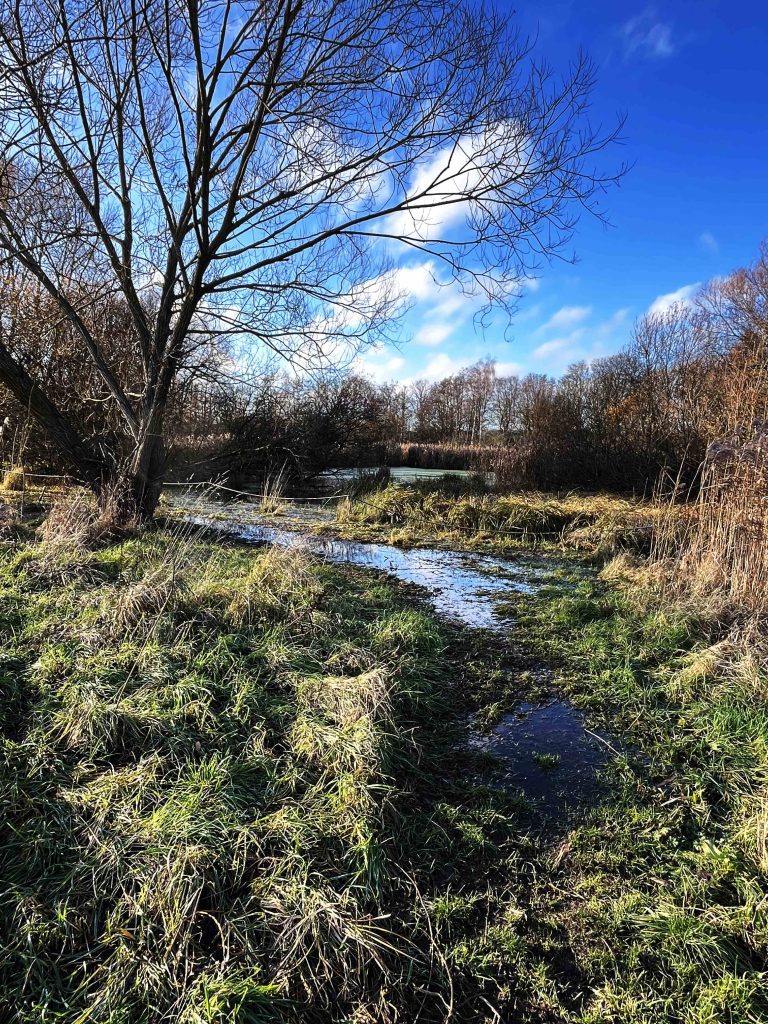
“We walk down the track, past large grazing herbivores and rootling animals, and hear the bright high call of a bird of prey. Looking up we catch glimpses of the sky shining through the tree canopy. As we head deeper into these ancient woods the bird song increases and we step up and up to progress slowly along the walkway amongst the trees.
“We look down, and see the gnawed ring-barked willow trees, felled trees, the enveloping wetlands, dams holding back bodies of water… evidence of the beavers. They’re resting somewhere in their lodge, hidden amongst the watery landscape. Through binoculars, their paw prints are visible in the mud.
“It’s hard to describe the elation that sweeps through us and we pause to gather our thoughts. We’re witnessing a fully functioning natural eco-system – the presence of the beaver, a keystone species, and the vibrant biodiversity that has resulted…”
I wrote the above as part of an exercise to imagine what a nature-centric London could feel like, as we discussed the potential for Beavers to be released on the borders of London and Essex. It was a fanciful story, a wish list, a dream. It hasn’t happened yet at that specific location, but there are now two Beaver enclosures in London, one in Ealing, one in Enfield, both thriving. The stories we envisage, the stories we tell, they become reality.
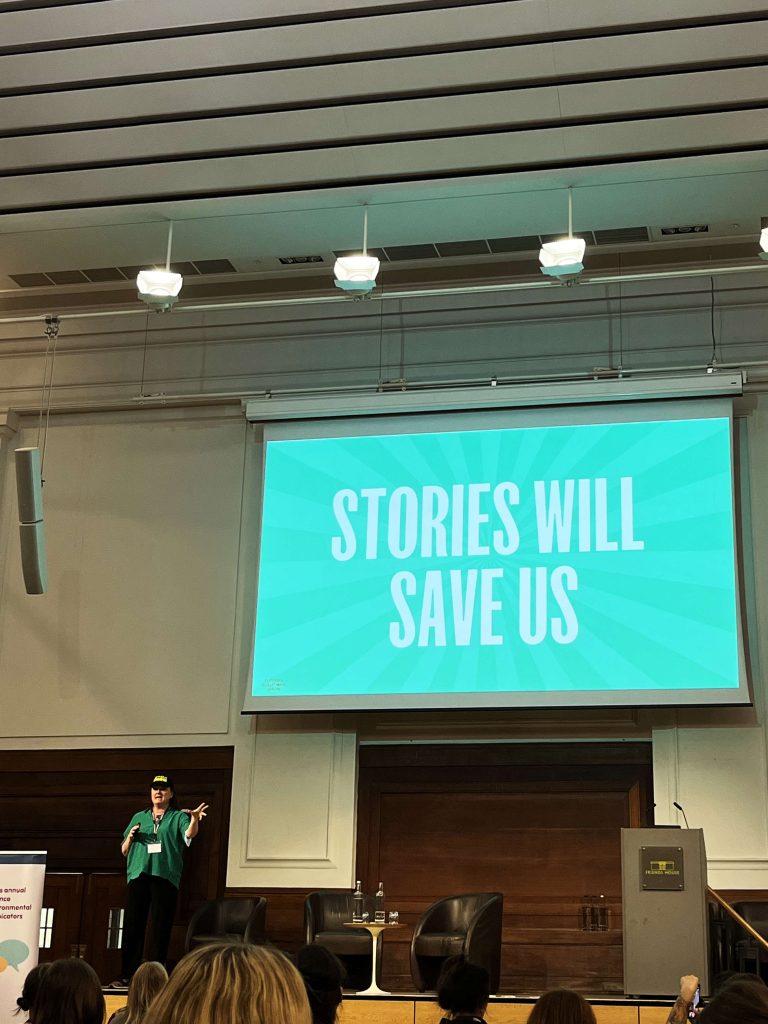
At a recent conference run by The Natural History Consortium, aptly titled Communicate, was a gathering of minds to think critically about how the ‘nature based community’ broadcasts our collective story. The overriding theme was we must tell the magical story of nature, and that these stories will save us. At a separate online conference run by the Environmental Funders Network, aimed at Funders & Fundraisers, a similar topic was covered, that of how we shift the storytelling to engage potential funders.
Yes, we are in difficult times, battling the narratives and legacies of colonialism, extractive capitalism and many other troubling intersectional issues. It’s vitally important we acknowledge these struggles, the real lived experiences happening across the planet now, particularly for the global majority (extreme floods, droughts etc), but we also need to move the dial away from “doomism” and towards the magical capacity for nature to heal itself, and us.
Emerging organisations such as Earth Minutes, Open Planet, Ecological Citizens, Moral Imaginations and Futerra are already doing great work at shifting the narrative, and charities like us, The Conservation Volunteers, are on the ground creating positive changes to our landscapes and improving access to the very nature we want to protect.
Our own TCV Vice-President Sir David Attenborough recently said “saving our planet is now a communications challenge”, and he’s completely right. The solutions are out there, what’s missing is the political will and overall storytelling to spread the positive reality and potential. They exist.
- 🌱 Increased connection to the natural world. We are nature, and we’re worth saving! (1)
- ☀️ Renewable Energy is cheaper than fossil fuels! (2)
- 🥕 Regenerative & healthy localised food cultures. (3)
- 😊 Improved mental wellbeing. Being in nature makes you feel and sleep better! (4)
- ⚡️ Nature & ecosystems are resilient! (5)
Phoebe Tickell, who founded Moral Imaginations and the concept of being an Imagination Activist spoke at the EFN conference, saying: “We don’t have a crisis of resources. We have a crisis of imagination”, and elaborates further in an article describing the work she does, “An Imagination Activist is a new kind of activist powered by imagination and vision and equipped with the tools to make the world better for everyone. Rather than working with guilt and despair, Imagination Activists work by inspiring others, giving people permission to dream, and expand their sense of what is possible. They highlight the options not on the table, and envision a future that engenders their deepest qualities and values. They raise collective ambition to help make the ‘impossible’ seem possible.”
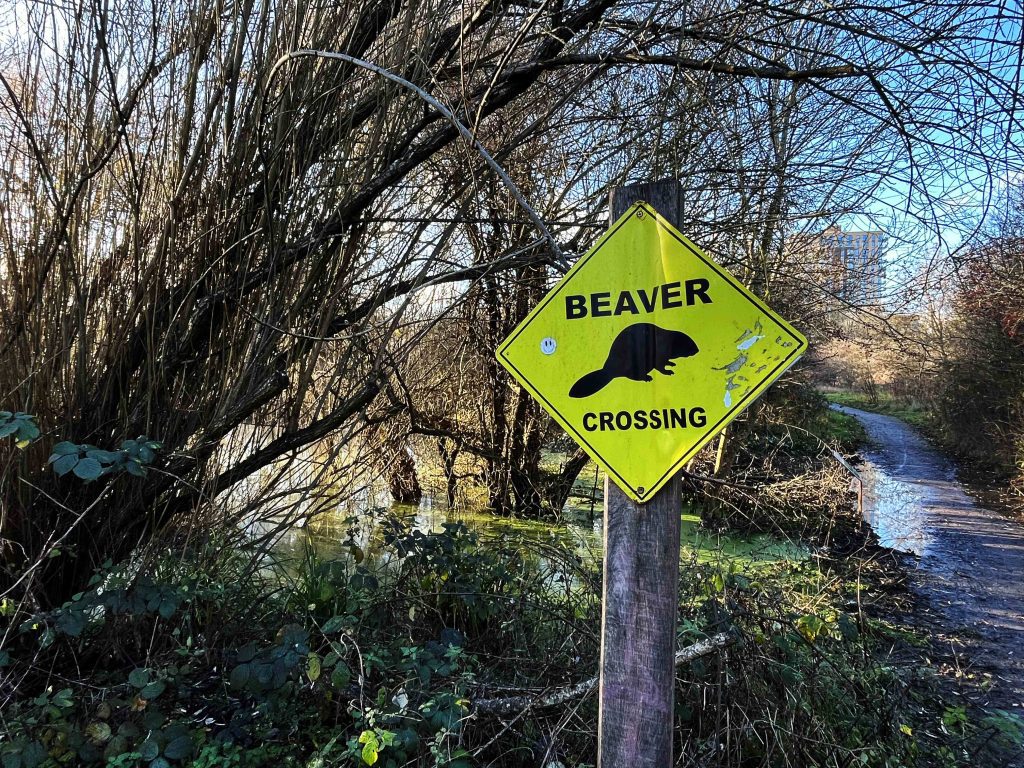
I spoke to Sean McCormack, project lead at the Ealing Beaver Project, who told me: “It’s not just about bringing beavers back after 400 years away from the British landscape, it’s about bringing their story back, that they are part of our landscape and heritage, that we can all live side by side, allowing these landscapes to exist, for us all to enjoy”.
The project has been so successful they were recently able to fund a new role of Urban Beaver Officer, designed to spread their message of landscape restoration. Seniz Mustafa started that role 2 months ago: “Beavers bring immense joy and curiosity to people in urban landscapes, where historically people may have had less access or opportunities. It’s an important element to the project that we create memorable, inclusive experiences for all, where people and nature can thrive together”.
Hundreds of volunteers have since been involved in the habitat management of Paradise Fields, including TCV-led corporate groups. The story of Beavers back in London has caught the mainstream imagination, with the BBC and Sky News covering details of the launch in October 2023, attended by Mayor of London Sadiq Khan.
Elliot Newton founded Citizen Zoo, partners at the Ealing Beaver Project, in 2019 with dreams of rewilding London with not just beavers, but also water voles & white storks. He sums up their vision: “We truly believe London can lead the way in urban rewilding and in helping people live alongside nature every day. Nature should not be something you have to travel miles to find. It should be on our doorsteps. We have a huge opportunity here to inspire people with the wonders of nature in their everyday lives. Rewilding can bring wildlife back into daily life while making London more resilient to climate breakdown and a healthier place to live. With 84% of people in the UK living in urban areas and almost nine million Londoners, the potential is enormous. Beavers, white storks and water voles are only the start. They show what’s possible when we embrace nature-based solutions and build a future-ready capital.”
The idea of White Storks returning to London are now edging closer to reality with the recently announced Rewilding East London project. The stories of the past became dreams of the present, and then reality.
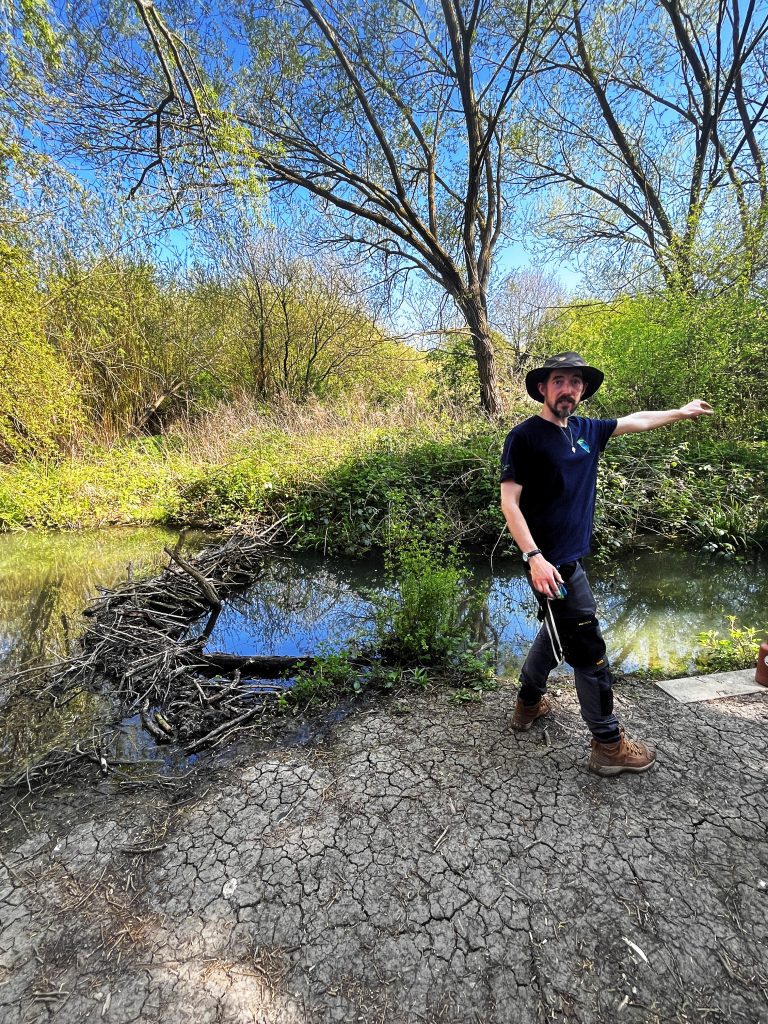
Meanwhile, grassroots activists and campaigners are following the same trend of taking storytelling further. Clean Up the River Brent (CURB) was literally started by a man and his dog (Ben Morris and Juno) in 2021 after a walk along the River Brent. It has grown into a community of hundreds of river guardians running clean up and citizen science events. Ben reflects: “A river is a story, with a past, a present and a future. Sadly we sometimes choose to ignore that future, polluting and exploiting at our convenience. CURB and other river action groups are rebuilding the stories of our rivers, giving them and ourselves a more meaningful and healthy future, and asserting the power of positive action. Every river event tells the same story – we can do this together”.
Ben recently helped create a short film of crowd-sourced video footage set to the music of Schubert’s “Trout Quintet”. Entitled The River Remembers, it’s a great example of combining art, activism and storytelling. TCV coordinates with CURB, Ealing Council and other charities such as Thames21, to clear invasive species along the River Brent every summer.
Back at the Communicate Conference founder of Futerra, Solitaire Townsend, said: “You are 22 more times likely to remember a story than other informative communications”. Whilst facts and data are important, they don’t catch the imagination in the same way. It is our duty to tell nature’s story, for everyone to remember, and for everyone to protect, for everyone to act. So what are you gonna do?
Now, let’s finish that story I was telling…
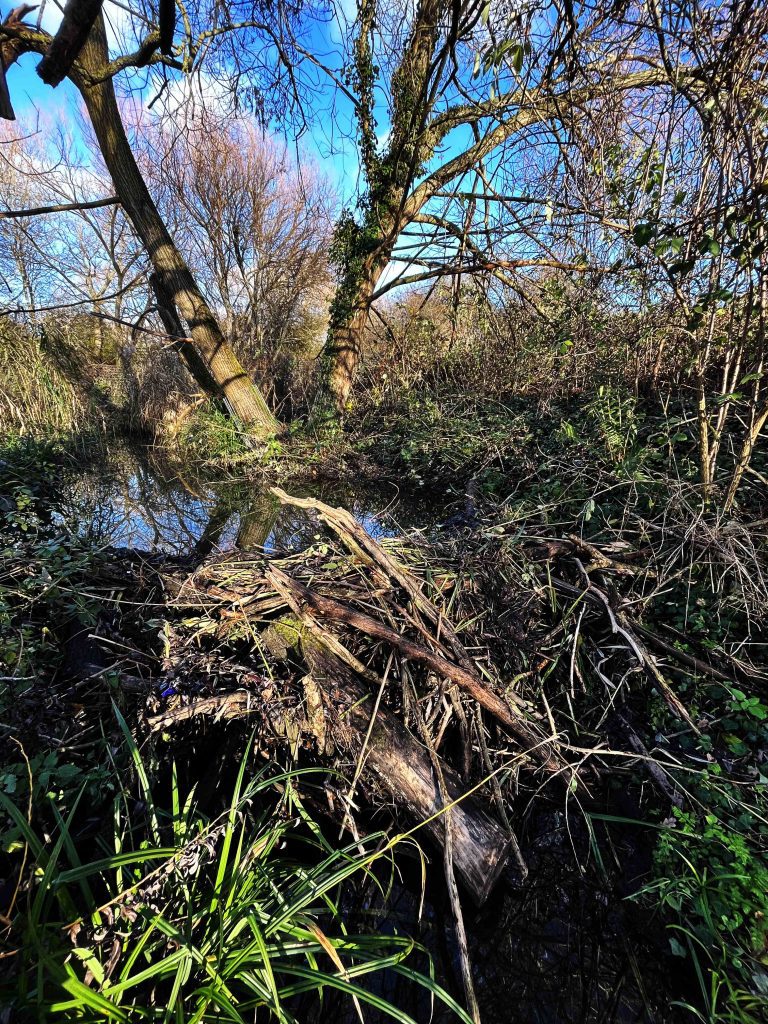
“…We continue down the path and it sweeps across the middle of this mysterious waterland, and under a sparkling tree canopy we’re immersed amongst beautiful stands of reeds, birdlife, signs and sounds of aquatic life and water voles, dragonflies, and our eyes flicker with the speed of a kingfisher cutting across the scene in a flash of bright metallic blue.
“This is a strong biodiverse core on the edge of London, where urban and country landscapes overlap. A corridor out from the metropolis, a corridor in from the countryside, a marginal zone where nature flourishes…”
Read another blog of David’s, all about how you can have a big impact with small steps: Climate resilience: Just take one step further forward…
David also found inspiration in the fantastic film The Global Goals featuring Al Pacino: