It seems to me that the natural world is the greatest source of excitement; the greatest source of visual beauty; the greatest source of intellectual interest. It is the greatest source of so much in life that makes life worth living.
TCV Vice President, Sir David Attenborough CBE
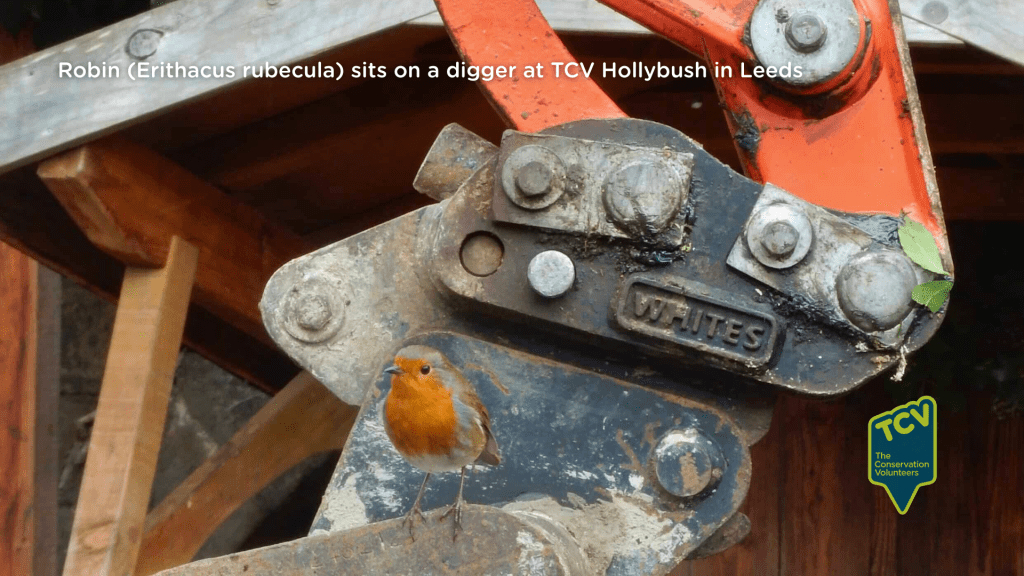
At TCV, we don’t have favourites – everyone is welcome to join in, feel good with our activities, and help deliver better nature for all. But when it comes to national treasures, few birds capture the British imagination like the robin (Erithacus rubecula). With its bright orange-red breast and melodic song, this small bird is a familiar sight in gardens, parks and woodlands across the UK.
This guide brings together everything you need to know about robins: identification, behaviour, nesting, folklore, and practical tips to attract them to your garden or local green space.
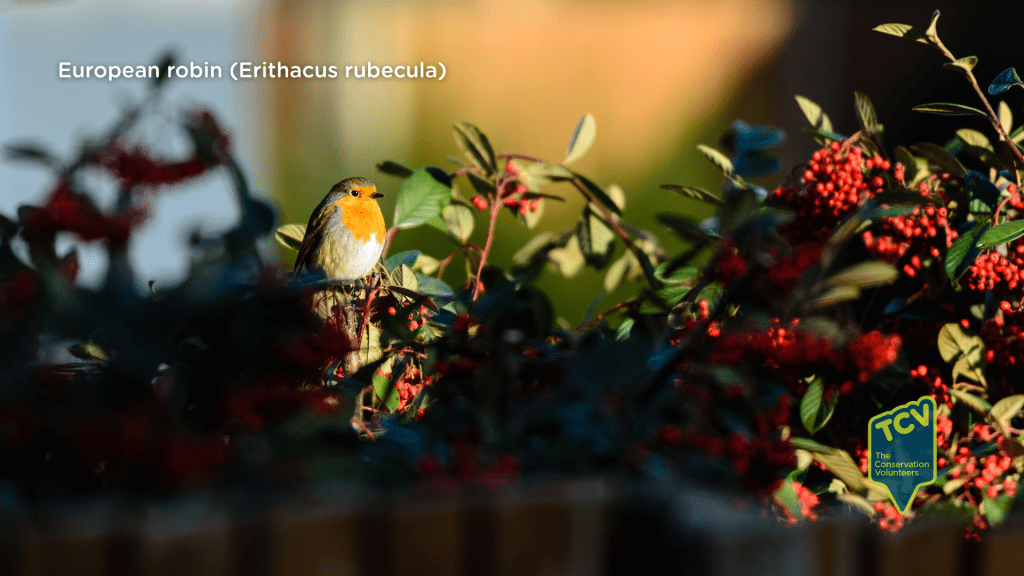
Robin Factfile
| Feature | Details |
| Scientific name | Erithacus rubecula |
| Average size | 14 cm length; wingspan 20–22 cm |
| Weight | 14–21 g |
| UK population | Approx. 7 million breeding territories |
| Conservation status | Green list (Least Concern) |
| Average lifespan | Around 2 years |
| Diet | Omnivorous: insects, worms, seeds, fruit |
| Song | Year-round singing, brief pause during summer moult |
Identification and Behaviour
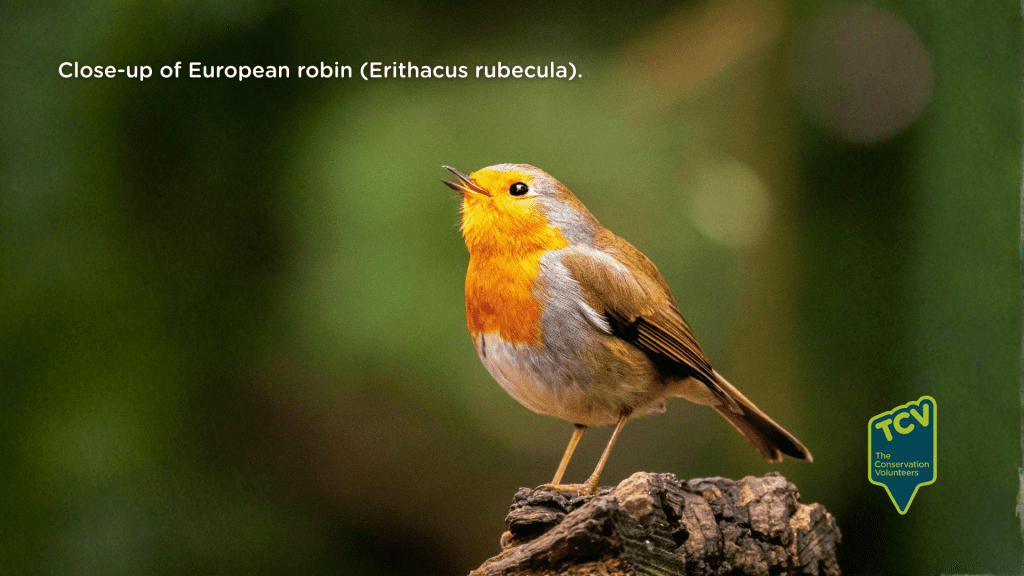
- Adults have a vibrant orange-red breast and face, olive-brown upperparts and a pale belly.
- Juveniles are speckled brown and only develop their red breast after their first moult.
- Robins are fiercely territorial and will defend their patch aggressively.
- British robins are notably bold, often following gardeners to catch worms unearthed by digging.
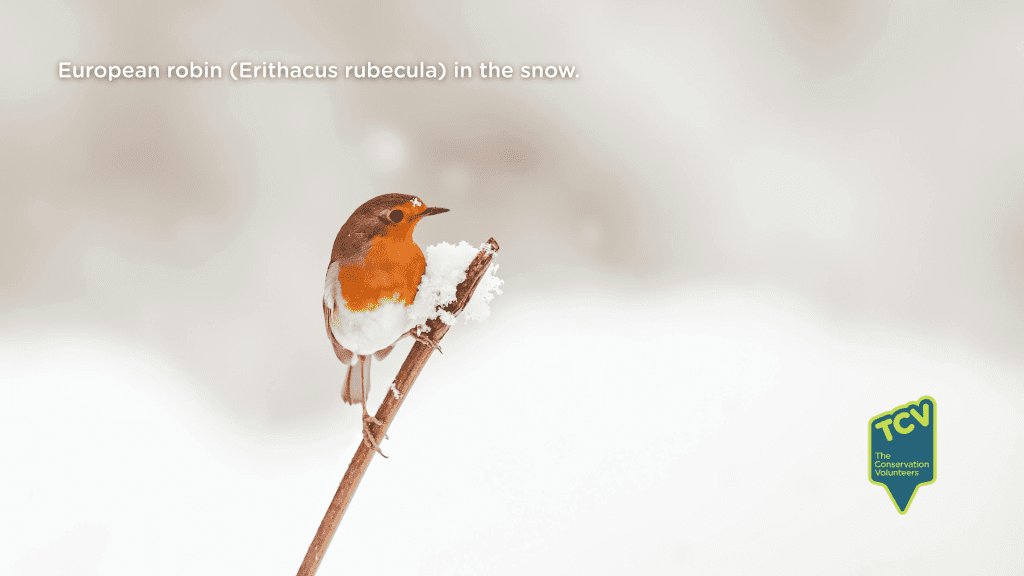
Song and Seasonal Activity
Robins sing nearly all year round, using their clear, musical song to maintain territories. Their song peaks during spring and autumn, continuing even into winter – sometimes after dusk under streetlights – with a brief pause during late summer moult.
Robin Diet and Feeding Tips
Robins feed on earthworms, insects, spiders, seeds and berries.
Feeding tips:
- Offer mealworms (live or dried), soft fruit (such as raisins), suet or fat balls, and seed mixes.
- Provide food on low platforms or the ground, near dense cover.
Robin Nesting and How to Help
- Breeding begins in March and continues through mid-summer.
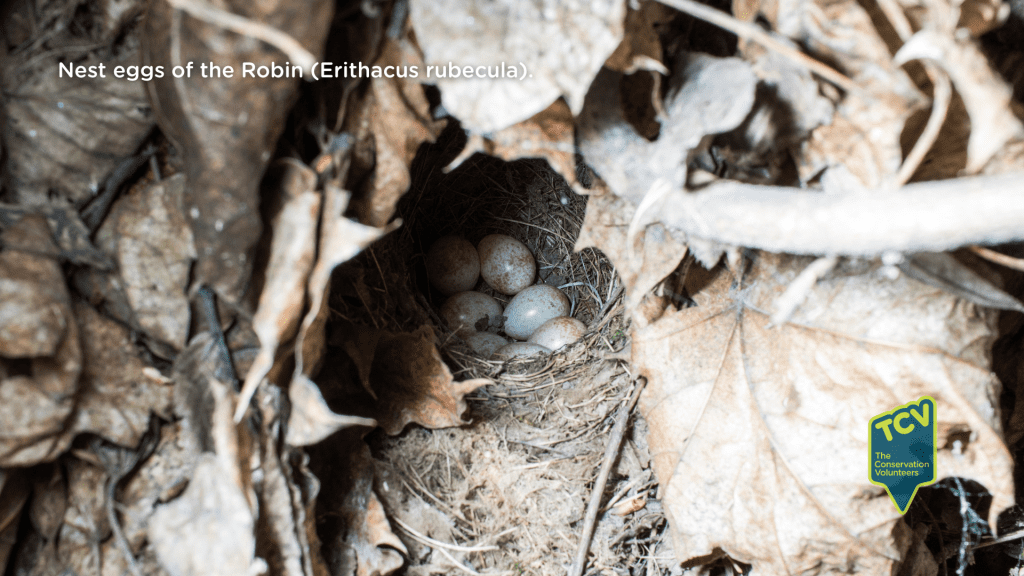
- Typical clutch size: 4–6 eggs; 2–3 broods per season.
- Nests are built low in dense vegetation, often in ivy, sheds or log stacks.
- Use an open-fronted nest box, placed low among cover, away from predators. Avoid disturbing nests during the breeding season.
Tips for Attracting Robins
- Plant native shrubs and hedges for shelter and nesting cover.
- Provide food year-round – especially in winter – using mealworms, fruit and suet.
- Add a shallow bird bath or a pond for bathing and drinking.
- Maintain leaf litter areas to encourage natural foraging.
- Install an open-fronted robin nest box hidden in vegetation.
- Avoid pesticides to support insect life.
- Join local green-space initiatives for habitat improvement.
I’ve joined in making a bird box, a Christmas wreath base and taken part in surveys of local birds and flower life. It’s fun, and the physical work involved in some of the tasks feels rewarding.
Caroline, TCV Volunteer
Robins and TCV
TCV volunteers help robins through planting woodland edges, restoring hedgerows and managing wildlife-friendly spaces. These habitats provide essential food, shelter and nesting sites – and bring people closer to nature.
Whenever we’d be doing activities in the woods, you would be pretty much guaranteed to see a robin drop by – either out of curiosity or, more likely, to pick up any tasty morsels we’d uncovered as we humans trampled about
Ralph, TCV Volunteer
Robin FAQs
When is the breeding season for robins in the UK?
The UK robin breeding season often begins in March and lasts until about July or August, allowing for two or even three broods. In mild winters, it can begin as early as January or February. They lay four to six eggs, which hatch in around 12 to 14 days.
Is the robin Britain’s national bird?
No official status exists, but it was first chosen as the unofficial national bird in a vote publicised by The Times in the 1960s. In a 2015 poll organised by ornithologist David Lindo, the robin received 34% of over 200,000 votes, securing its place as the public’s top choice.
How many robins live in the UK?
The British Trust for Ornithology estimates roughly 7 million breeding territories. Numbers vary with winter conditions but remain healthy overall.
Do robins sing all year?
Yes – they sing throughout the year to defend territories, with a quiet spell during late-summer moult. Winter singing is common, often heard in low light or under streetlights.
Why are robins on Christmas cards?
Victorian postmen wore red uniforms and earned the nickname “robins.” Card illustrators used the bird image to symbolise festive mail delivery. An older legend of Robin Redbreast tells of a robin that fanned the fire in Jesus’s birthplace to keep the newborn baby warm. Its breast became red due to the flames, symbolising a selfless act of compassion.
What nest box should I use for robins?
Choose an open-fronted nest box placed low in dense cover, away from direct sun and predators. It’s best to minimise disturbance during the breeding season (most likely March to July).
Get Involved
Keep up to date with the latest news and activities from The Conservation Volunteers by following us on Facebook, LinkedIn, Instagram, BlueSky and YouTube.
You can also sign up to receive TCV’s Greenzine e-newsletter for more ways to get involved.
TCV is active across most of the UK: Click here to find your nearest office or activity.
There’s a greater satisfaction to the day being outdoors: the outdoor environment and the physicality of the activity … We’re standing in a beech forest with the birds singing and a little stream behind us — it’s really hard to beat!
Andrew, TCV Volunteer