A playful homage to TCV’s Vice President, Sir David Attenborough – the rarest species of all: a centenarian human who has helped millions see we are a part of nature, not apart from it.
Here, a young primate turns his attention to a pebble, a feather, a fossil. To many, trifles. To him, vital clues. From such small beginnings, an entire life’s calling. And as the human learns, he shares what he finds, and so the troop learns too…
Quick classification
Common name: Sir David Attenborough
Scientific name: Homo sapiens
Kingdom: Animalia
Phylum: Chordata
Class: Mammalia
Order: Primates
Family: Hominidae
Genus: Homo
Species: Homo sapiens
Born: 8 May 1926, Isleworth, Middlesex, England
Diet: Omnivorous, largely plant‑leaning. He has cut out red meat in recent years, while still eating fish and cheese.
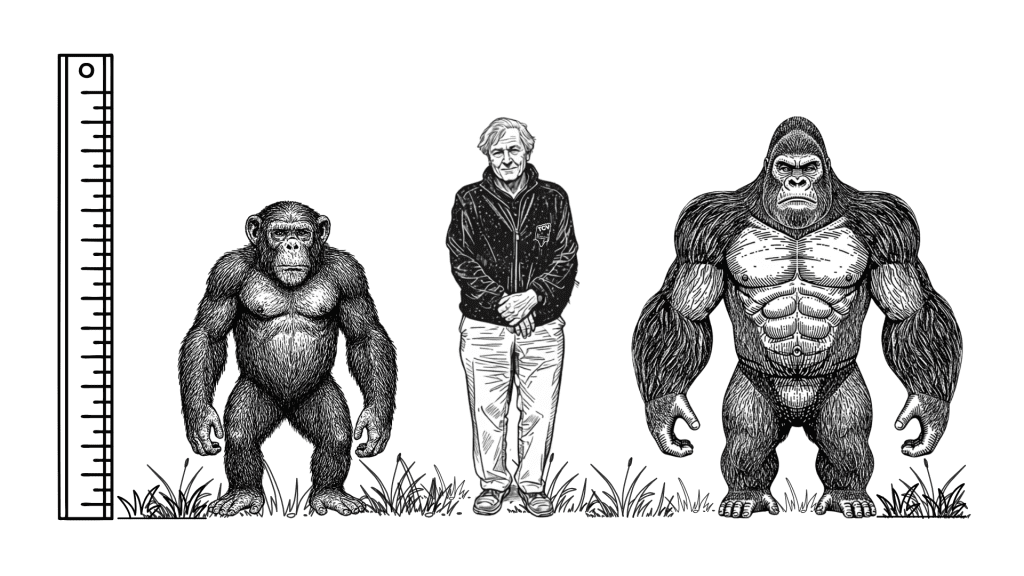
Height: Approximately 1.78 m. Typically taller than a chimpanzee and broadly comparable to a standing silverback gorilla, though exact comparisons vary by individual.
Field notes on the species
Early years and development
From the outset, the young Attenborough displayed classic juvenile Homo sapiens traits: relentless curiosity, keen pattern‑spotting and a strong preference for collecting things. Growing up on a university campus in Leicester, he explored the ponds and hedgerows as though they were a savannah at the edge of the world. At 11, he was already attempting local trade, selling newts to the nearby zoology department. As with many human young, his developmental arc was shaped by exposure: books, talks, encounters with mentors, and countless hours outdoors. The result was an adult whose primary instinct is to look closely, then help others to see.
Lifelong mission
Attenborough’s life’s work is to inspire care for the living world and to explain why a stable, biodiverse planet is essential to human health. Over decades, his focus broadened from natural history to champion practical action: restore biodiversity, shift to clean energy, limit warming pollution, eat lower on the food chain, and set aside more land and sea for nature. The through‑line is simple and profound. If people can experience nature, they will care. If they care, they will protect.
Signature calls (David Attenborough quotes listen out for)
- “No one will protect what they don’t care about; and no one will care about what they have never experienced.”
- “It is that range of biodiversity that we must care for, the whole thing, rather than just one or two stars.”
- “An understanding of the natural world is a source of not only great curiosity, but great fulfilment.”
- “The truth is: the natural world is changing. And we are totally dependent on that world. It provides our food, water, and air. It is the most precious thing we have and we need to defend it.”
- “It’s surely our responsibility to do everything within our power to create a planet that provides a home not just for us, but for all life on Earth.”
Enduring impact
Sir David Attenborough’s most popular TV series, films and books.
These series transformed what audiences expect from factual television, and turned a quiet passion for wildlife into a shared global experience:
- Planet Earth (with sequels)
- The Blue Planet and Blue Planet II
- Life on Earth and the wider Life collection
Top three David Attenborough documentary films to watch:
- David Attenborough: A Life on Our Planet (2020)
- Attenborough and the Sea Dragon (2018)
- Dinosaurs: The Final Day with David Attenborough (2022)
Top‑selling David Attenborough books:
These titles have reached wide audiences in multiple editions, often accompanying landmark programmes and introducing new generations to the wondrous fabric of life on Earth.
Social behaviour and symbiosis
Throughout his long career, Sir David Attenborough has worked alongside a range of conservation organisations that share his commitment to restoring the natural world. Each partnership reflects a slightly different facet of his mission, from protecting global biodiversity to strengthening local volunteering efforts on the ground.
Collaborators for wildlife protection include:
- WWF: Attenborough has worked closely with WWF on global conservation campaigns that raise awareness of biodiversity loss and promote practical action to protect habitats.
- World Land Trust: As Patron of the World Land Trust, he supports its mission to purchase and safeguard threatened landscapes around the world.
- RSPB: He has long been associated with the RSPB, which recognised his contribution to conservation with its prestigious RSPB Medal.
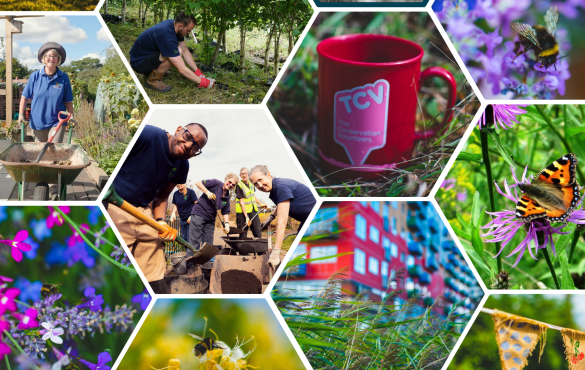
- The Conservation Volunteers (TCV) – Closer to home, Attenborough’s role as Vice President of TCV reflects his support for practical, community‑based conservation. TCV brings together thousands of volunteers to restore green spaces and improve habitats across the UK, showing that environmental recovery is as much about local stewardship as it is about global ambition.
The Conservation Volunteers are the unsung heroes of the environment. Who does the back‑breaking work of digging ditches and clearing them? Who turns out on a cold day? Answer, members of TCV.
TCV’s Vice President, Sir David Attenborough
These partnerships reflect a simple pattern in the species: when presented with evidence and a path to help, humans can be astonishingly effective at restoring habitats and reviving wildlife.
If we give nature space, it returns the favour. Forests breathe easier, seas grow richer, cities become kinder. In time, the human animal learns that its greatest act of self‑preservation is generosity to the living world.
Five quick and surprising David Attenborough facts
- David Attenborough was rejected from his first BBC job application as a radio producer, but eventually returned to reshape television. He went on to create Life on Earth, the first truly global natural history epic, watched by an estimated 500 million people worldwide.
- As BBC Director of Programmes, David Attenborough commissioned Monty Python’s Flying Circus, the surreal sketch show that became a global comedy phenomenon and a defining part of Britain’s cultural identity.
- David Attenborough never learned to drive and has never held a driving licence, choosing instead to rely on other forms of travel throughout his career.
- David Attenborough is the only person to have won BAFTAs across black‑and‑white, colour, HD, 3D, 4K and VR.
- Numerous species are named in David Attenborough’s honour, from plants to prehistoric giants. Take a look here for a list of plants, animals and other things named after Sir David Attenborough
David Attenborough FAQs
Popular search queries from across the web…
What was David Attenborough’s first job?
After graduating, he worked for an educational publishing house before joining the BBC in 1952.
Are David and Richard Attenborough related?
Yes. Richard Attenborough was his elder brother.
What is David Attenborough’s favourite animal?
He has celebrated countless creatures over the years. A recent subject of delight is the Weedy Seadragon (Phyllopteryx taeniolatus).
Why is David Attenborough so good?
Clarity, backed by scientific and wonder. He pairs scientific accuracy with storytelling that dignifies both the animals and the audience. He invites you to look, understand, then act.
No one will protect what they don’t care about; and no one will care about what they have never experienced.
Sir David Attenborough
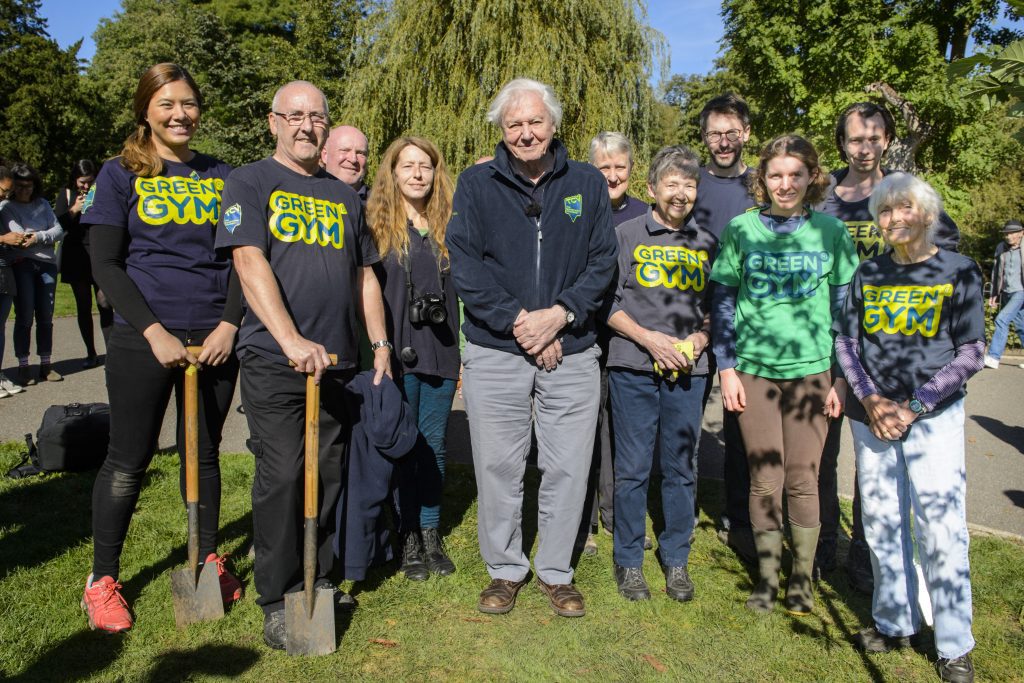
If this page inspires you to get closer to nature, join The Conservation Volunteers for a practical session in a local green space. Caring grows from experience. Experience starts with a single morning outdoors.

Keep up to date with the latest news and activities from The Conservation Volunteers by following us on Facebook, LinkedIn, Instagram, BlueSky and YouTube.
You can also sign up to receive TCV’s Greenzine e-newsletter for more ways to get involved.