Across the UK, access to green space is not always easy, especially in built-up urban areas. Yet we know that spending time in nature can play a powerful role in supporting our mental health, helping us feel calmer, more connected and more resilient.
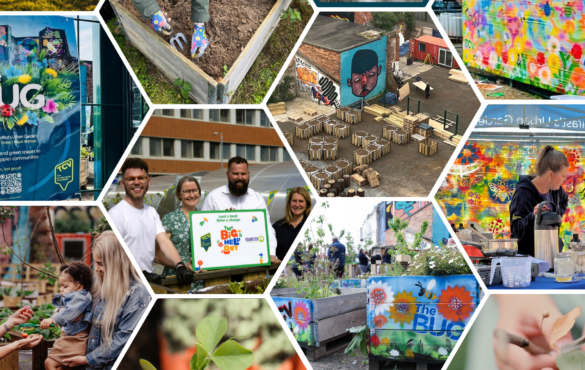
At The Conservation Volunteers (TCV), we see every day how connecting people with nature supports the health and wellbeing of communities. Projects like Greenwich Peninsula Ecology Park show how carefully designed urban green spaces can transform even the most built-up environments into places that benefit both people and nature.
Read to find out more about this fantastic initiative in London, alongside tips for supporting your own mental health by connecting with nature.
By Georgiana Irimia, TCV Senior Project Officer, London
Greetings from Greenwich Peninsula Ecology Park! If you have not heard of us yet, we are a nature oasis in the middle of a highly built-up contemporary urban development, largely defined by its modern concrete landscape.
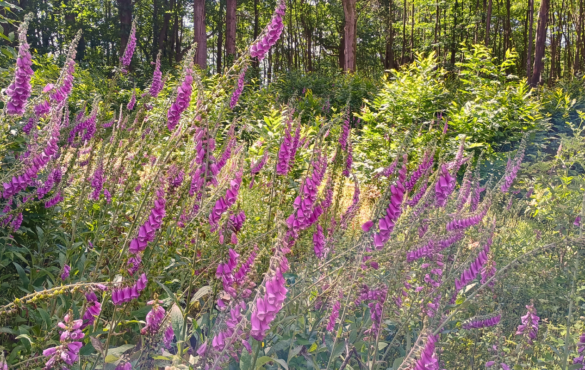
Our park was designed as part of a regeneration programme aimed at returning post-industrial land to people and nature. Picture this: a mosaic of habitats, meadows, woodlands, shingle beaches and wetlands, all packed into a four-acre site. The park has a strong focus on freshwater habitats and supports a rich biodiversity that has developed over time.
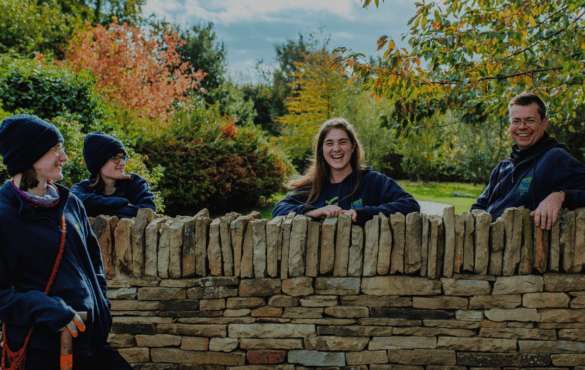
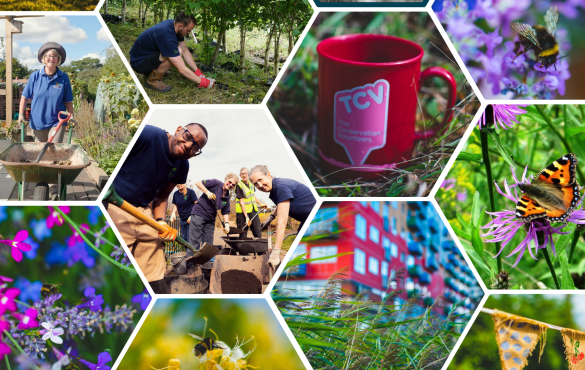
Like many TCV sites, we dedicate our work to conserving nature and bringing people closer to it through habitat management volunteering, educational activities, and events for schools, families and a wide range of community groups.
A Different Way to Connect People to Nature
Over two years ago, we began experimenting with a different approach to help people engage with nature in ways that benefit both the natural world and participants’ wellbeing.
There is a wealth of scientific research demonstrating the positive impact nature has on mental health. Our own experience has also shown that the more we educate people about nature, the more likely they are to spend time outdoors and take steps to protect it.
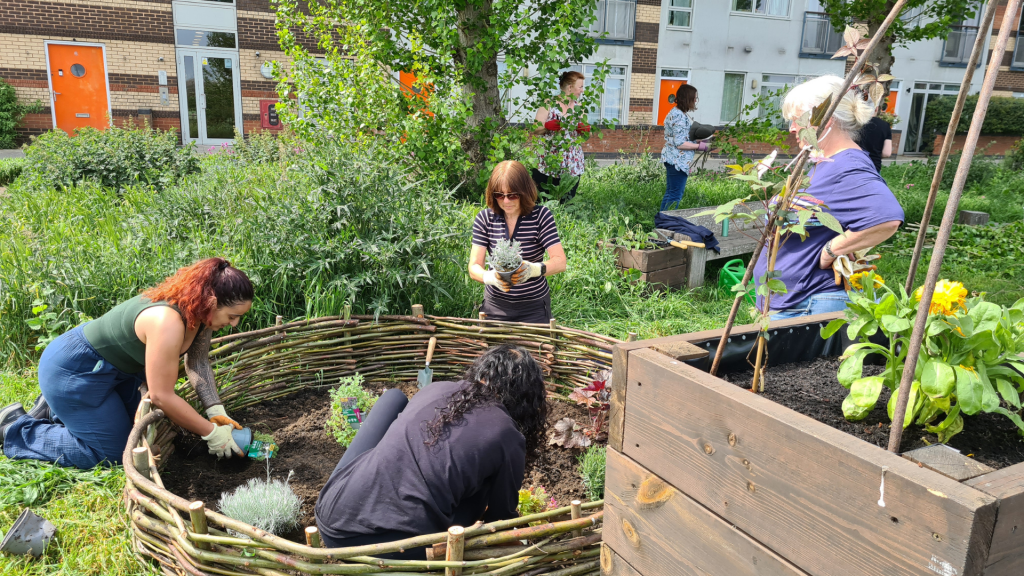
Building on this evidence, in 2024 we launched a nature wellbeing club dedicated to women: a safe and welcoming space where women can connect with nature, learn about it, and unwind in the company of others through craft activities and a shared cup of tea.
Women’s Nature Wellbeing Club is a unique space. It has given me the chance to mix with other women of all ages and backgrounds, learn new skills, connect to nature and slow down. It makes me want to spend more time in nature and take action to protect it.
Women’s Nature Wellbeing Club Participant
The success of this initiative led us to seek funding for a wider wellbeing club. Towards the end of 2025, with support from The London Community Fund and the Friends of Greenwich Peninsula Ecology Park, we launched our second wellbeing club, open to all adults.
What Is the Urban Nature Wellbeing Club?
Urban Nature Wellbeing is a one-year project that delivers 12 free, limited-space sessions, open to all adults. The sessions are carefully designed and delivered by a qualified mental health practitioner and experienced environmental educator, who is also one of our part-time project officers. Each session covers the five aspects of wellbeing: learning, being active, connecting with the community, noticing and giving forward, shifting the focus between these elements depending on the session topic.
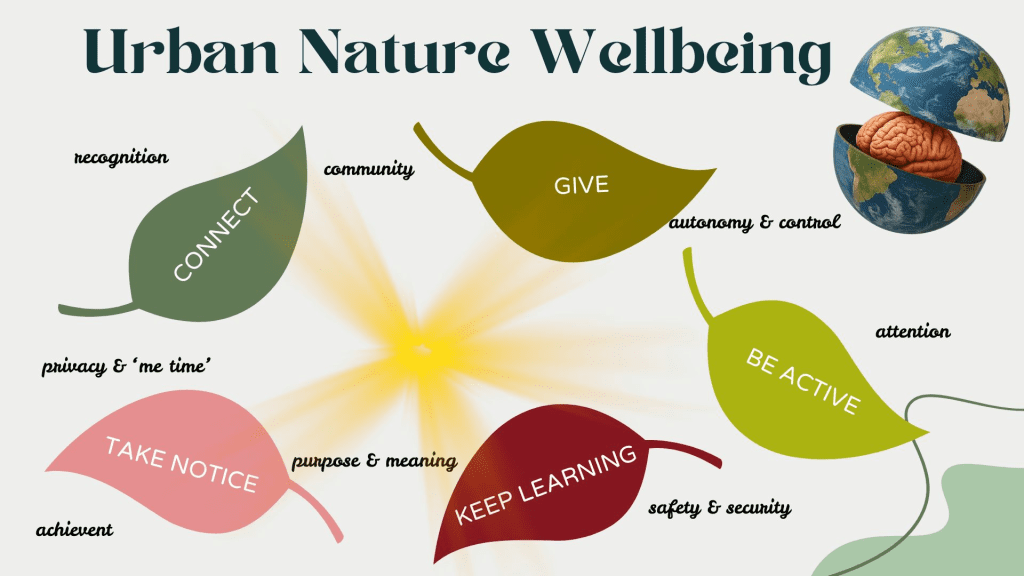
Through our monthly sessions, we are raising awareness of the peninsula’s green spaces and their ecological importance, while showing our participants how even small pockets of nature can impact their wellbeing and local biodiversity. We hope not only to encourage people to spend more time outdoors, but also to empower them to make their own wellbeing – and the wellbeing of their natural environment – a priority.
Think of our club as a cake recipe:
- For the base, we have located different green spaces in the peninsula. Each session focuses on a different area, although some locations are revisited several times
- For the filling, we blend knowledge about nature and local history
- For the icing, we carefully select mindfulness techniques and activities that calm the mind, reset the nervous system and help participants feel more connected to the local area, community and themselves.
The final result is a programme that nurtures the mind, body and soul, reduces stress, strengthens resilience, and inspires self care, connectedness, and meaningful engagement with nature.
It has taken my mind off pressures and helped me feel connected to the space and community around me.
Urban Nature Wellbeing Participant
Nature awakens our curiosity and nurtures our creativity, helping us to become a better version of ourselves. It helps us keep learning, it teaches us about resilience and supports us in finding meaning even in the most difficult times. Observing and engaging with nature helps us understand not only the outside world but also our inner world.
What have we achieved so far
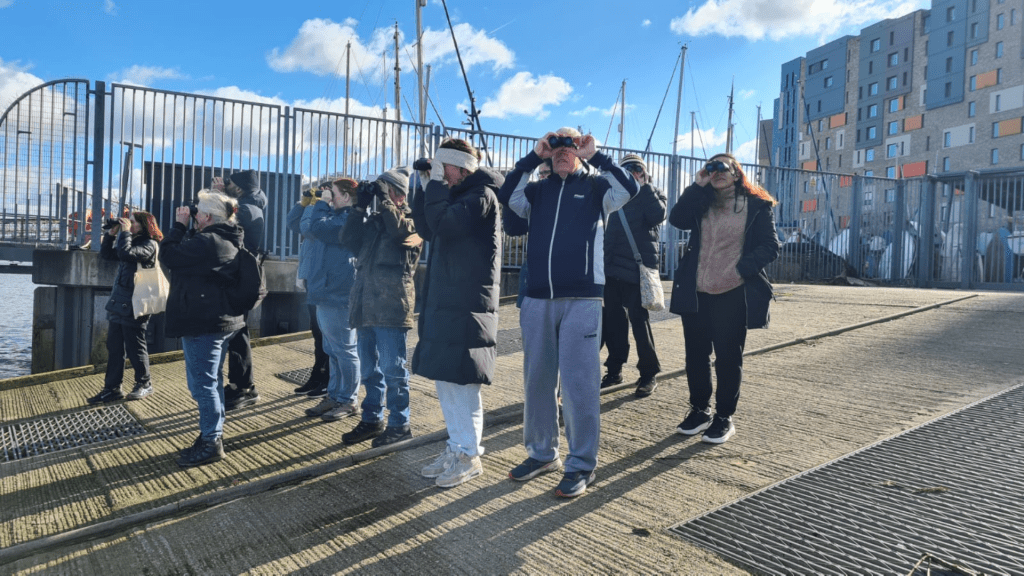
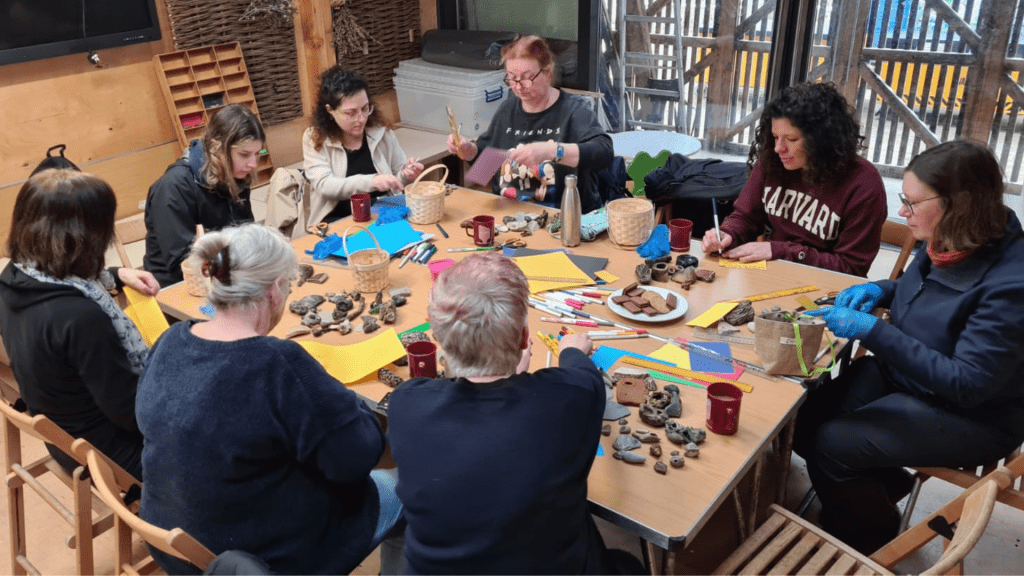
We are now five months into our project, which means five sessions already delivered. The sessions’ topics included calming shapes and patterns in nature, birdwatching, the river and the connection between water and our minds and gardening as a tool to relax and recharge.
We have learned to use art (inspired by various natural patterns) as a way to slow down, we have discovered new natural spaces to explore in the peninsula, and experienced how using the breath and gentle movements can help us ground and calm busy minds.
Here is what our participants said:
What stood out from today’s session was the importance of getting outside and ‘being’ rather than always doing. Definitely something I want to do more of.
I was impressed with how many different birds there are on my doorstep. I really enjoyed how relaxing and calming the session was. Keen to take what I’ve learned and continue birdwatching at home. I feel very relaxed and at peace. I will definitely stop and listen to my surroundings.
The activity made me feel calm, gave me a different perspective and encouraged me to be more curious about the community spaces and the history of the area.
Simple Ways to Connect with Nature for Wellbeing
If practical habitat work is not available, or is not your cup of tea, here are a couple of simple practices connected to nature that we recommend:
Breathing with the waves
If you’re walking along the seaside or beside a tidal river, pause in a safe spot and settle into stillness. Let your attention rest on the waves as they roll in and out. Notice how your breath mirrors this movement – in, out, in, out – steady and rhythmic. Try taking a few deep inhales down into your belly, followed by long, slow exhales, perhaps gently through your mouth.
Garden your mind
The mind is like a garden: anything can grow in it, and what you nurture most is what thrives. Different thoughts may pass through, but the ones you give your attention to are the ones that take root and grow stronger.
With this in mind, take yourself out into nature and gently ask: “What is troubling me right now? What am I carrying that no longer serves me?” Slow your pace and notice what this “thing” might be, and where you feel it in or around your body.
Find a moment of stillness and take a few deep breaths. With each exhale, imagine this “thing” loosening its grip and leaving your body. You can add a mindful intention:
• On the inhale: “I am aware of [what troubles me], and I am thankful for the lesson it is trying to teach me.”
• On the exhale: “As I no longer need it, I respectfully return it to nature. May it go to someone or something that needs it more.”
Repeat this 4–6 times.
When our conservation volunteers approach an overgrown area with the intention of turning it, for example, into a meadow, it can take months or even years of steady, persistent work before the ground is clear enough to receive new seeds – and more time still before the meadow flora establishes. The mind works in the same way: patience, care, and consistency help create space for healthier thoughts to grow.
What’s Next for Urban Nature Wellbeing
We are looking forward to continuing to explore the peninsula’s natural spaces and to connecting with them and with one another through art, movement and sensory experiences, while learning and practising mindfulness and discovering new ways to get involved with the local community.
The full programme of sessions with TCV’s Project Officer can be found here:
www.georgianairimiacounselling.co.uk/urban-nature-wellbeing-club/
You can also explore upcoming events at Greenwich Peninsula Ecology Park:
www.tcv.org.uk/greenwichpeninsula/events/
Alongside our sessions, we are developing a local map highlighting green spaces across the peninsula, with ideas on how to connect with them and support your wellbeing.
We are grateful to The London Community Foundation and the Friends of Greenwich Peninsula Ecology Park for supporting this initiative, and to everyone who has taken part or shown interest so far.
Why Urban Nature Matters Across the UK
Greenwich Peninsula Ecology Park is a powerful example of how urban green spaces can support both people and nature. Across the UK, projects like this are helping more people experience the benefits of spending time outdoors, from improved mental health to stronger community connections.
If you are inspired to experience the benefits for yourself, you can explore the idea further in our blog on how volunteering can boost your wellbeing.
Or take the next gentle step and find a local opportunity to connect with nature near you: www.tcv.org.uk/find-tcv/

Keep up to date with the latest news and activities from The Conservation Volunteers by following us on Facebook, LinkedIn, Instagram, BlueSky and YouTube.
You can also sign up to receive TCV’s Greenzine e-newsletter for more ways to get involved.