No one will protect what they do not care about, and no one will care about what they have never experienced.
Sir David Attenborough, TCV Vice President
The good news for many is that experiencing nature does not have to mean hiking up mountains or becoming an expert in wildlife identification.
Sometimes it simply starts with a butterfly.
Whether you’re walking through a local park, spending time in the garden, visiting a nature reserve or simply noticing what flies past on your lunch break, butterflies are one of the easiest and most rewarding ways to begin connecting with the natural world.
This isn’t about becoming a butterfly expert overnight. It’s about taking a first step towards noticing nature a little more often.
At TCV, we believe that when people connect with nature, both people and wildlife benefit. Creating Better Nature for All starts with moments of curiosity like these.
Key takeaways
- You don’t need any specialist knowledge to start recognising common UK butterflies.
- Summer is one of the best times to spot butterflies in gardens, parks and green spaces.
- Recording what you see can contribute to citizen science projects that help conservationists understand how butterfly populations are changing.
- Learning to identify a few familiar species is a simple and enjoyable way to build a lifelong connection with nature.
We’ve also created a free printable Beginner’s UK Butterfly Spotting Guide, featuring all 12 species in this article. Download it at the end of this article and see how many you can spot this summer.
Why butterfly spotting is such a great introduction to nature
You don’t need to be an expert to enjoy butterflies. Learning to recognise just a few common species could be the first step towards a lifelong appreciation of nature. They’re colourful, active and often willing to show themselves on a sunny day. Once you’ve successfully identified one or two species, you’ll start noticing them everywhere.
You don’t need to be an expert to enjoy butterflies. Learning to recognise just a few common species could be the first step towards a lifelong appreciation of nature.
Butterfly spotting is also suitable for almost anyone. It’s a brilliant family activity, but it’s equally enjoyable if you’re walking the dog, tending a garden, volunteering outdoors or simply looking for a reason to spend a little more time outside.
Better still, butterflies tell us a lot about the health of our environment. Many species depend on specific plants and habitats to survive, making them valuable indicators of a thriving natural world.
So next time the sun comes out, why not see how many of these common UK butterflies you can spot? Whether you spot just one species or all twelve, remember that butterfly spotting isn’t about getting every identification right. It’s about slowing down, paying attention and enjoying the wildlife around you.
1. Large White
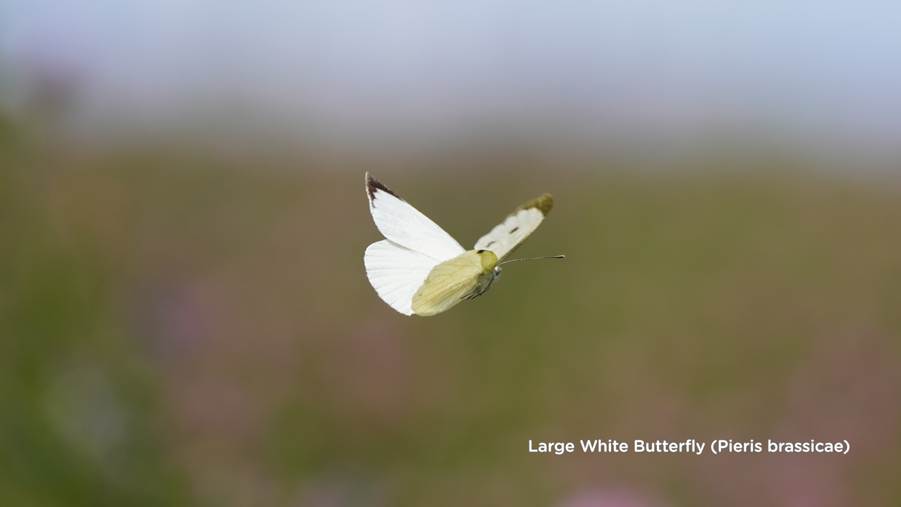
Scientific name: Pieris brassicae
One of the UK’s largest and most familiar butterflies, the Large White is a frequent visitor to gardens and allotments throughout summer.
Quick fact file
Where to spot it: Gardens, allotments, parks, farmland and roadside verges
Adult nectar sources: Buddleia, thistles, dandelions and knapweed
Caterpillar food plants: Cabbages, kale, broccoli, wild mustards and nasturtiums
Beginner spotting tip: Large Whites are noticeably bigger than Small Whites, with bold black wing tips and a strong, purposeful flight. If a white butterfly catches your eye because it seems surprisingly large, it’s probably a Large White.
2. Small White

Scientific name: Pieris rapae
Often seen in the same places as the Large White, the Small White is one of Britain’s most widespread butterflies and can be found almost anywhere there are flowers and gardens.
Quick fact file
Where to spot it: Gardens, parks, allotments, meadows and urban green spaces
Adult nectar sources: Buddleia, dandelions, clovers, thistles and knapweed
Caterpillar food plants: Cabbages, kale, broccoli, wild mustards and nasturtiums
Beginner spotting tip: Small Whites are smaller and more delicate-looking than Large Whites, with less black on the wing tips. They often appear brighter white and flutter lightly through gardens and flower-rich areas.
3. Meadow Brown
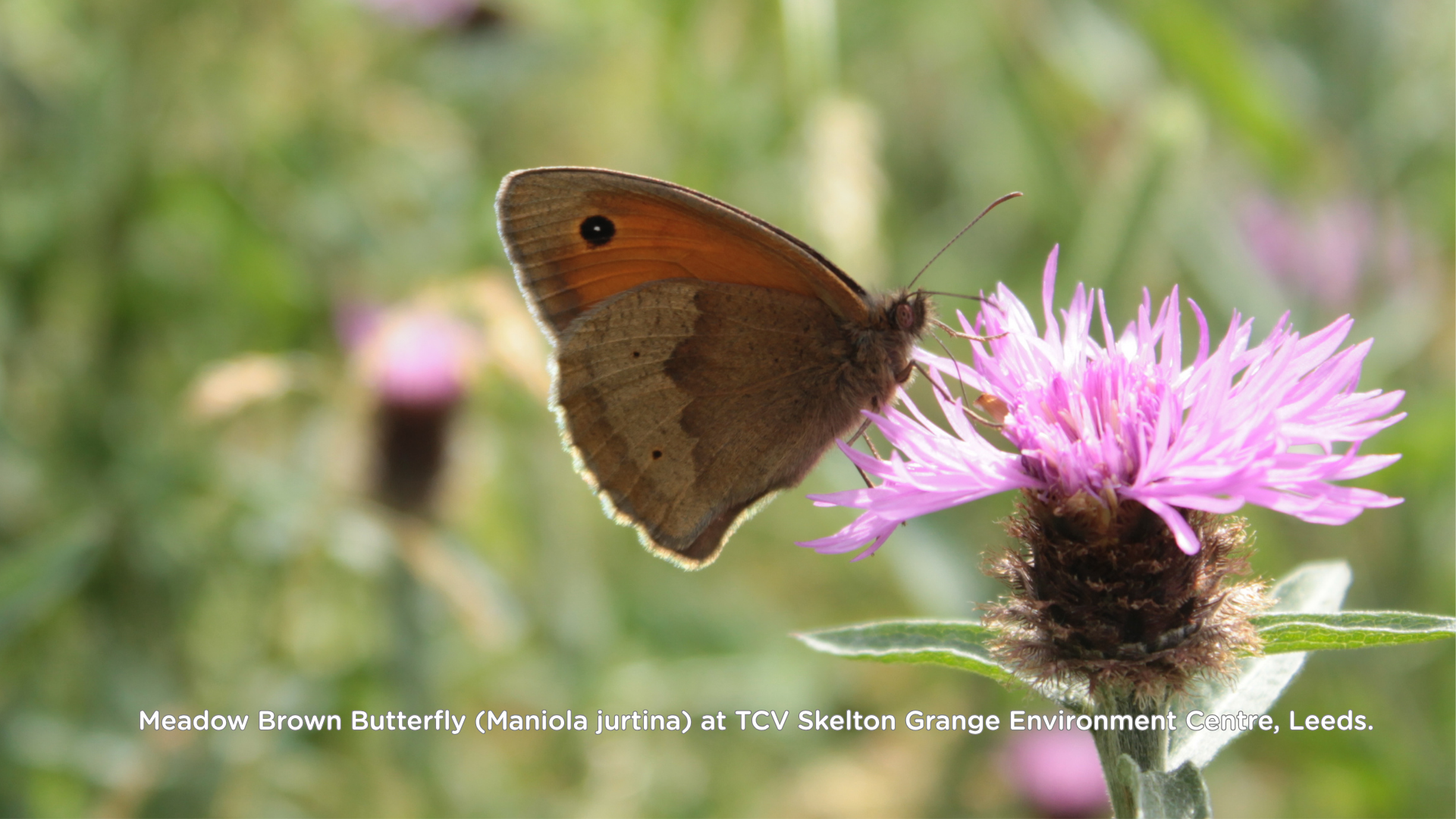
Scientific name: Maniola jurtina
Don’t let the name fool you. This understated butterfly is one of the most widespread species in Britain and often one of the first beginners learn to recognise.
Quick fact file
Where to spot it: Meadows, grasslands, parks and field margins
Adult nectar sources: Bramble flowers, thistles, knapweed
Favourite caterpillar food plants: Fine grasses such as fescues and meadow grasses
Beginner spotting tip: Look for brown wings with distinctive orange patches and a single black eyespot.
4. Gatekeeper
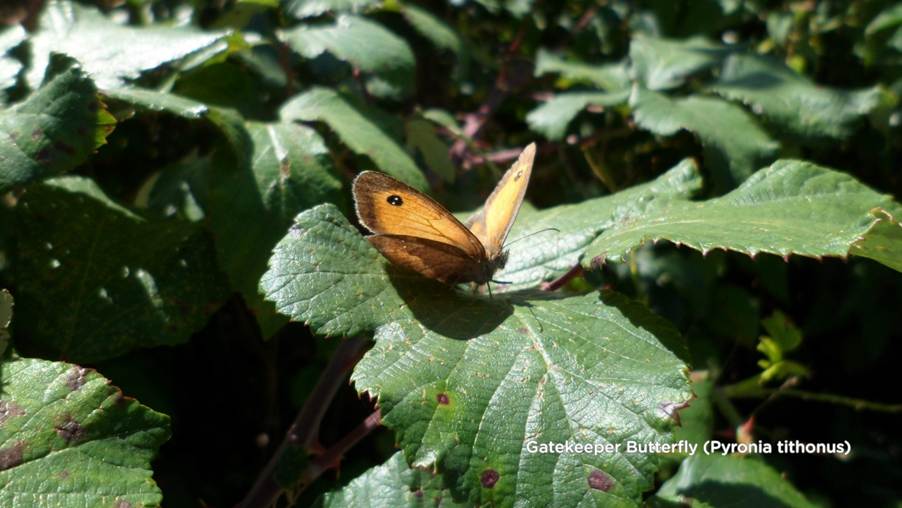
Scientific name: Pyronia tithonus
Often found alongside Meadow Browns, the Gatekeeper is slightly brighter and more orange in colour.
Quick fact file
Where to spot it: Hedgerows, woodland edges and sunny field boundaries
Adult nectar sources: Bramble, ragwort, marjoram and knapweed
Favourite caterpillar food plants: Fine grasses, including meadow grasses, couch grasses and fescues.
Beginner spotting tip: Its warm orange wings and dark brown borders make it easier to spot than many grassland butterflies. Think of the Gatekeeper as the brighter cousin of the Meadow Brown. Meadow Browns are mostly brown with a splash of orange, while Gatekeepers are mostly orange with a brown border.
5. Red Admiral

Scientific name: Vanessa atalanta
One of Britain’s most striking butterflies, with bold red bands set against black wings.
Quick fact file
Where to spot it: Gardens, parks, woodlands and urban green spaces
Adult nectar sources: Buddleia, ivy flowers, asters and ripe fruit
Favourite caterpillar food plants: Stinging nettles
Beginner spotting tip: The combination of black wings, bright red bands and white spots near the wing tips makes this butterfly stand out from most other common UK species.
6. Peacock
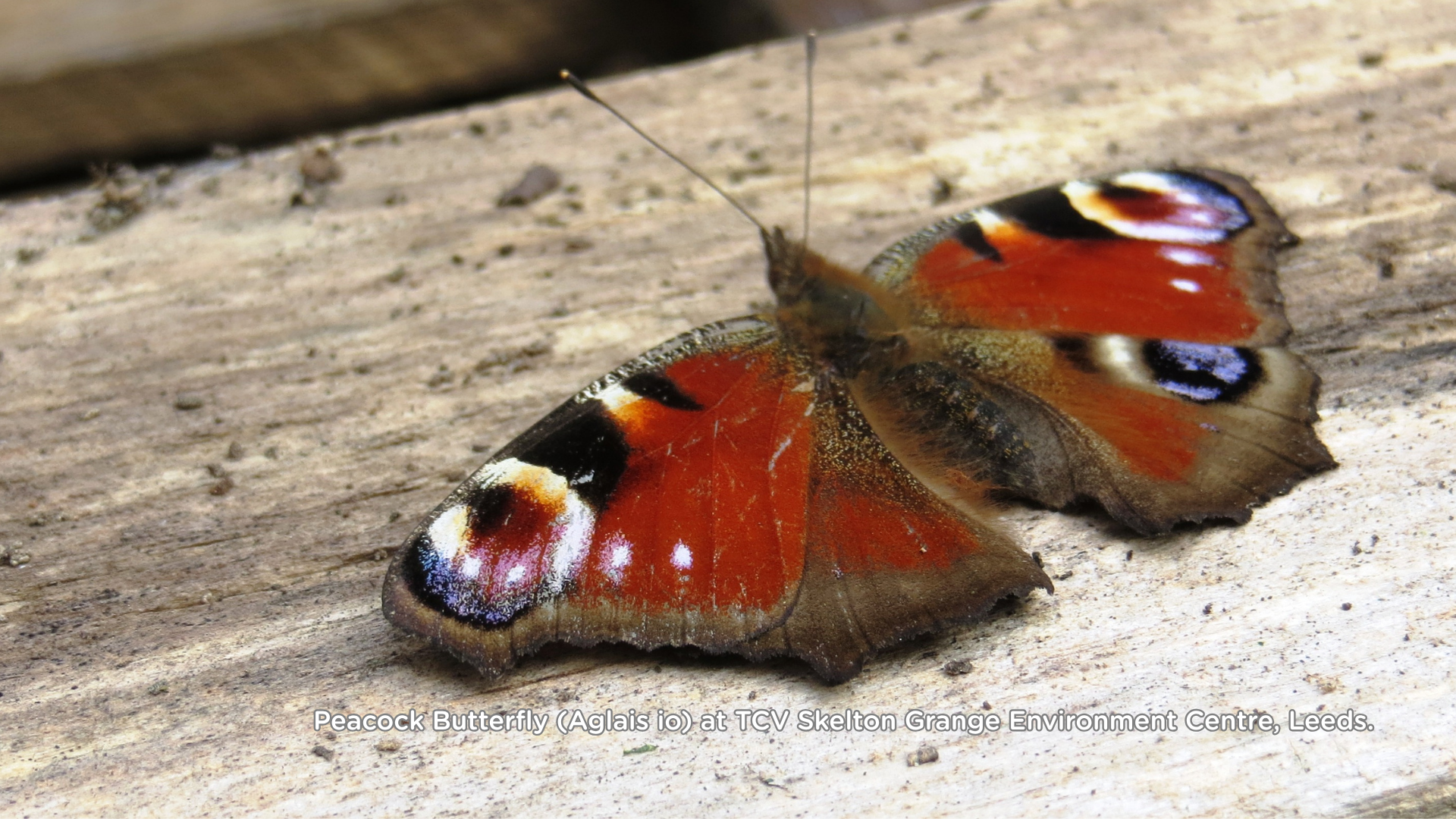
Scientific name: Aglais io
Perhaps Britain’s most recognisable butterfly, thanks to the large eye-shaped markings on its wings.
Quick fact file
Where to spot it: Gardens, parks, woodland rides and flower-rich grasslands
Adult nectar sources: Buddleia, thistles and knapweed
Favourite caterpillar food plants: Stinging nettles
Beginner spotting tip: The dramatic eyespots look like the pattern on a peacock’s tail feathers.
7. Painted Lady

Scientific name: Vanessa cardui
The Painted Lady is one of nature’s great travellers. Some individuals that reach Britain are part of migrations stretching thousands of miles across Europe and North Africa. Up to ten generations of butterflies each finish a portion of the voyage, continuing where their predecessors left off, rather than one butterfly making the journey entirely alone.
Quick fact file
Where to spot it: Flower-rich gardens, grasslands, coastal areas and countryside meadows
Adult nectar sources: Thistles, buddleia, lilac, knapweed and scabious
Favourite caterpillar food plants: Thistles are preferred, alongside mallows, nettles and related plants.
Beginner spotting tip: Look for orange wings covered in intricate black and white markings.
8. Comma

Scientific name: Polygonia c-album
One of the easiest butterflies to identify once you know what to look for.
Quick fact file
Where to spot it: Woodland edges, hedgerows, gardens and parks
Adult nectar sources: Bramble flowers, ivy flowers and overripe fruit
Favourite caterpillar food plants: Hops and nettles are favourites, although caterpillars may also use elm and currant species.
Beginner spotting tip: The ragged wing edges make it look more like a dead leaf than a butterfly.
9. Orange-tip
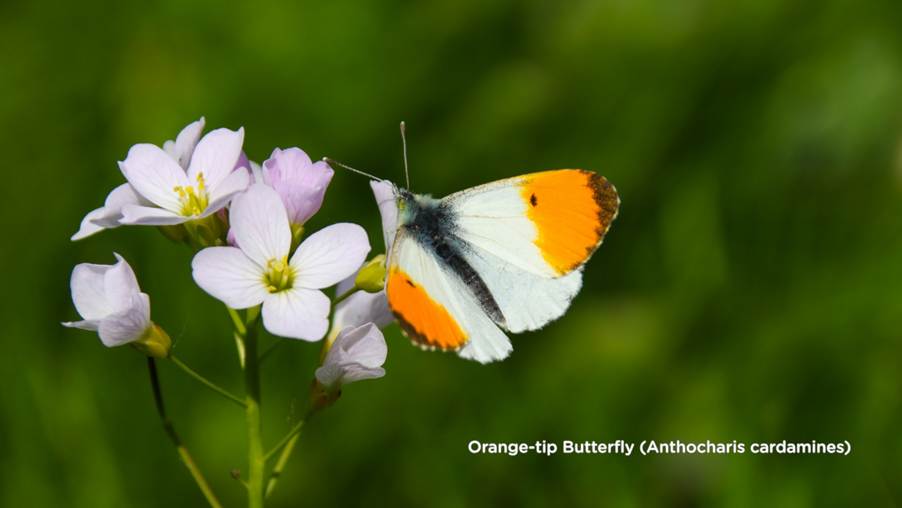
Scientific name: Anthocharis cardamines
A true seasonal favourite. Although mainly a spring butterfly, Orange-tips can still be seen into early summer.
Quick fact file
Where to spot it: Wildflower meadows, country lanes and damp grasslands
Adult nectar sources: Cuckooflower, garlic mustard and other spring wildflowers
Favourite caterpillar food plants: Garlic mustard and cuckooflower
Beginner spotting tip: Males have bright orange wing tips that are impossible to miss.
10. Brimstone
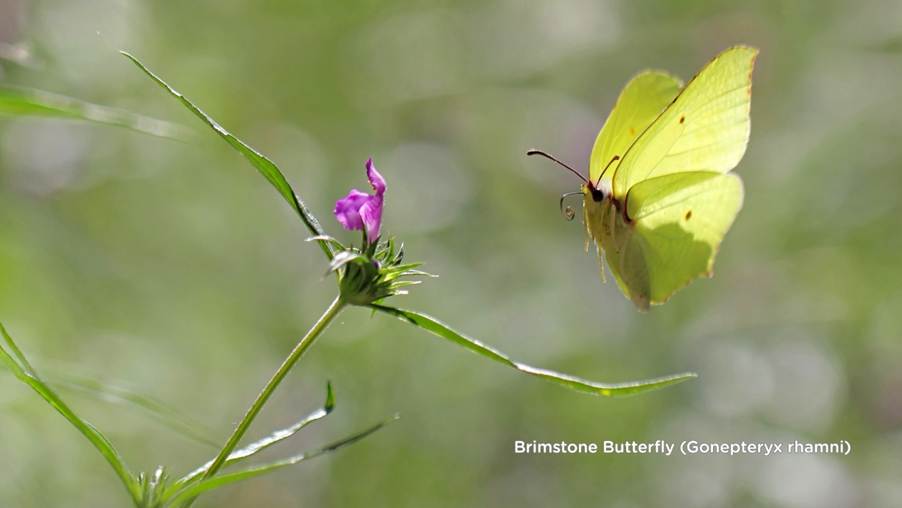
Scientific name: Gonepteryx rhamni
A beautiful butterfly whose leaf-shaped wings help it blend into surrounding vegetation.
Quick fact file
Where to spot it: Woodland edges, hedgerows, gardens and open countryside
Adult nectar sources: Primrose, knapweed, teasel and thistles
Favourite caterpillar food plants: Alder buckthorn and purging buckthorn
Beginner spotting tip: Males are a vivid lemon-yellow colour that seems to glow in sunshine.
11. Speckled Wood

Scientific name: Pararge aegeria
Unlike many butterflies that prefer open spaces, this species often thrives in dappled shade.
Quick fact file
Where to spot it: Woodland paths, shaded parks and tree-lined walkways
Adult nectar sources: Bramble flowers, honeydew and tree sap
Favourite caterpillar food plants: Woodland grasses
Beginner spotting tip: Look for creamy patches scattered across rich brown wings.
12. Small Tortoiseshell
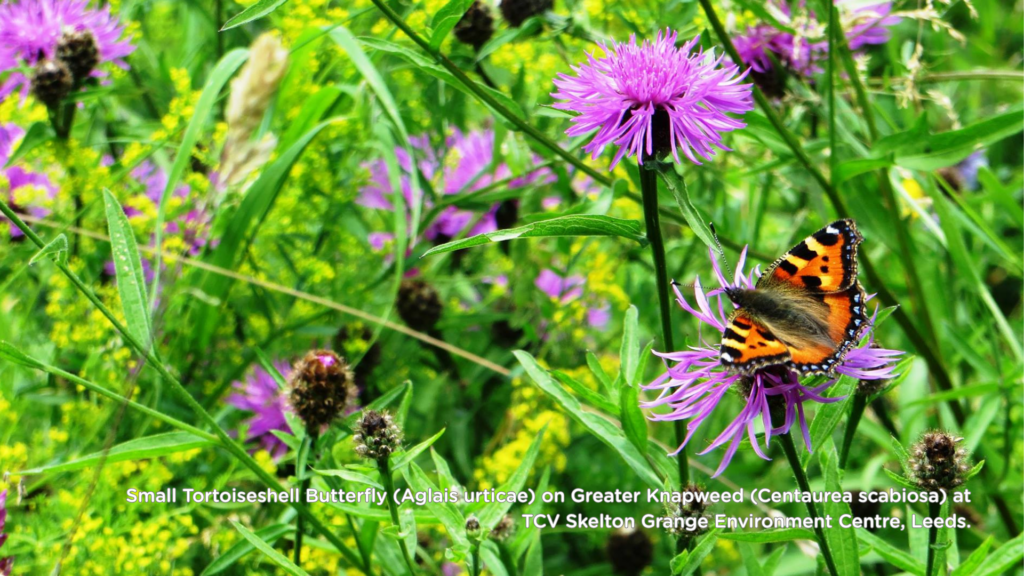
Scientific name: Aglais urticae
One of Britain’s most familiar and colourful butterflies, the Small Tortoiseshell has been delighting nature lovers for generations. Although numbers have declined in some areas, it’s still a species many people encounter in gardens, parks and flower-rich green spaces.
Quick fact file
Where to spot it: Gardens, parks, meadows, nature reserves and sunny countryside paths
Adult nectar sources: Buddleia, knapweed, thistles, marjoram and other nectar-rich flowers
Caterpillar food plants: Stinging nettles
Beginner spotting tip: Bright orange wings with bold black markings and a row of tiny blue spots around the edges. It can sometimes be confused with the Peacock, but unlike the Peacock, it doesn’t have large eye spots on its wings.
What butterflies can I see in the UK in summer?
The butterflies in this guide are among the species most likely to be seen during summer. Large and Small Whites, Meadow Browns, Gatekeepers, Red Admirals, Peacocks and Painted Ladies are particularly common during the warmer months and can often be spotted in gardens, parks and other local green spaces.
If you’re just starting out, focus on learning three or four species first. You’ll quickly build confidence and begin noticing the differences between them.
How to attract more butterflies to your garden
You don’t need acres of land to help butterflies.
A few small changes can make a real difference:
- Grow nectar-rich flowers such as knapweed, scabious, marjoram and buddleia.
- Let part of your lawn grow longer.
- Leave some wild corners for caterpillars and other wildlife.
- Avoid unnecessary pesticide use.
- Include native plants wherever possible.
And remember, caterpillars need food too. A patch of nettles might not look exciting to us, but it’s a nursery for species such as the Peacock and Red Admiral.
Turn your butterfly spotting into citizen science
Once you start recognising butterflies, why not put your sightings to good use?
Taking part in schemes such as the Big Butterfly Count run by Butterfly Conservation, helps conservationists build a picture of butterfly populations across the UK. Every observation contributes to a better understanding of how species are faring and where conservation action may be needed.
It’s a simple but powerful reminder that local action can contribute to something much bigger. Head here for more information on citizen science from TCV.
Your next step for nature
Learning to identify a few common UK butterflies might seem like a small thing.
But every lifelong interest in wildlife starts somewhere.
The next butterfly you spot could be the beginning of a deeper connection with the natural world, a new hobby, a family tradition, or even a journey into conservation volunteering.
Because when people notice nature, they start to care about it. And when people care, nature stands a better chance of thriving.
That’s how we create Better Nature for All.
Ready to take your butterfly knowledge with you? Download our free printable Beginner’s UK Butterfly Spotting Guide and start ticking off species on your next outdoor adventure!

Keep up to date with the latest news and activities from The Conservation Volunteers by following us on Facebook, LinkedIn, Instagram, BlueSky and YouTube.
You can also sign up to receive TCV’s Greenzine e-newsletter for more ways to get involved.