Food waste is one of the UK’s biggest environmental challenges. According to recent estimates, the UK generates 10.2 million tonnes of food waste in a year, with households responsible for 58% of the total by weight. That’s food that required land, water, energy and transport to produce, only to be wasted.
Pumpkin waste is a striking example of that wider challenge. Every Halloween, millions of pumpkins are grown from seed, nurtured using land, water and energy, harvested by workers, packed, transported to retailers, bought, taken home, carved and then thrown in the bin, despite being perfectly good to eat.
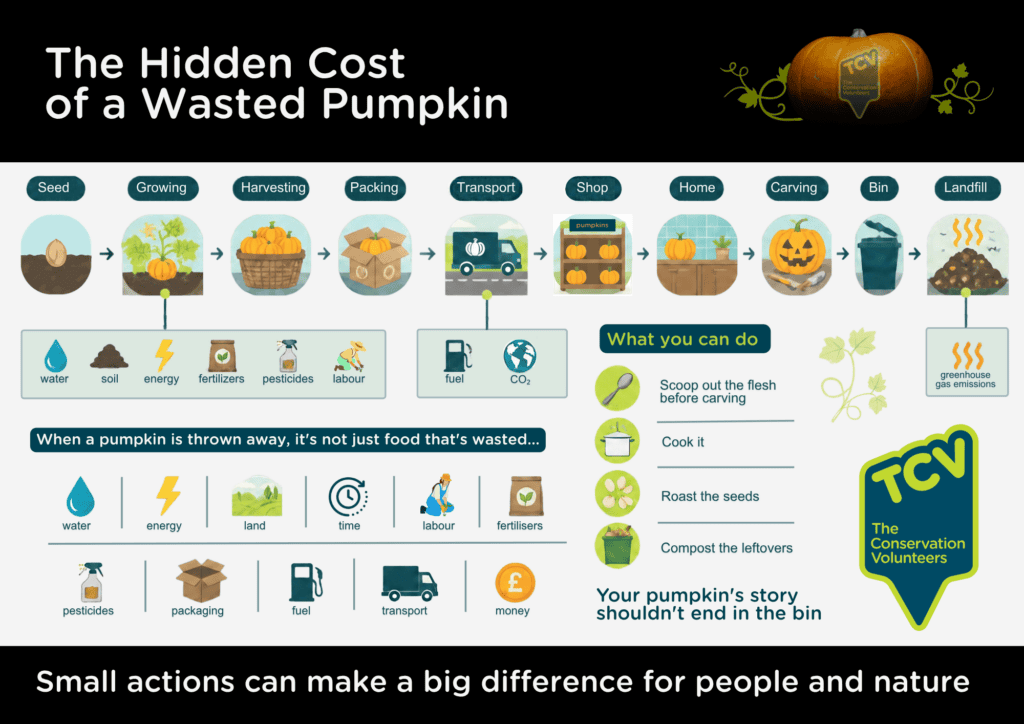
When a pumpkin ends up in the bin, it’s not just the food that’s wasted. The water, fertilisers, pesticides, labour, packaging, fuel, transport and money that helped bring it from field to doorstep are wasted too. If it ends up in landfill, it can also contribute to greenhouse gas emissions as it breaks down. Check out the infographic at the end of this article.
At The Conservation Volunteers (TCV), we know that small actions can make a big difference for people and nature. One simple way to reduce waste this Halloween is to make the most of the pumpkin you’ve already bought.
Wondering what to do with your leftover pumpkin? We’ve scoured the internet for some of the most trusted, highly rated pumpkin recipes from UK food publishers, so you don’t have to. Whether you’re looking for a quick soup, a hearty family meal or a seasonal bake, there’s something here to help you make the most of your pumpkin and reduce waste.
Top tip: Scoop out the flesh before carving your pumpkin. You’ll have fresher pumpkin to cook with, and it makes it much easier (and hygienic) to turn your Halloween decoration into delicious meals and treats.
Starters and Sides
1. Thai Pumpkin Soup
A fragrant, warming soup that’s packed with autumn flavour and one of the highest-rated pumpkin recipes on BBC Good Food.
Recipe: https://www.bbcgoodfood.com/recipes/thai-pumpkin-soup
2. Pumpkin Soup with Ginger, Herbs & Coconut Milk
Created by Jamie Oliver, this comforting soup was specifically designed as a tasty way to use leftover Halloween pumpkin.
Recipe: https://www.jamieoliver.com/recipes/vegetables/pumpkin-ginger-soup
3. Roasted Pumpkin Houmous
A delicious twist on traditional houmous that’s ideal for sharing, dipping and snacking.
Recipe: https://lizearlewellbeing.com/read/lifestyle/roasted-pumpkin-hummus-recipe
Main Meals
4. Pumpkin Chickpea Coconut Curry
A hearty vegan curry combining pumpkin, chickpeas and coconut milk for the ultimate autumn comfort food.
Recipe: https://www.jamieoliver.com/recipes/vegetables/pumpkin-chickpea-coconut-curry
5. Pumpkin, Cranberry & Red Onion Tagine
A flavour-packed vegetarian dish that’s highly rated by readers of BBC Good Food.
Recipe: https://www.bbcgoodfood.com/recipes/pumpkin-cranberry-red-onion-tagine
6. Warming Vegan Slow Cooker Pumpkin Stew
A hearty, plant-based pumpkin dish that’s perfect for colder autumn days and a great way to use up plenty of leftover pumpkin.
Recipe: https://www.goodhousekeeping.com/uk/food/recipes/a37414980/slow-cooker-pumpkin-stew/
7. Pumpkin Lasagne
A comforting vegetarian bake that’s perfect for using up larger amounts of pumpkin and feeding a family.
Recipe: https://www.midcounties.coop/our-businesses/food/recipes/Pumpkinlasagne
Desserts and Baking
8. Pumpkin Bread
A seasonal favourite that’s perfect with a cup of tea and a brilliant way to use leftover pumpkin.
Recipe: https://www.tamingtwins.com/pumpkin-spice-loaf/#wprm-recipe-container-8434
9. Pumpkin Cake
One of the best-performing pumpkin bakes online, with hundreds of positive reviews.
Recipe: https://www.bbcgoodfood.com/recipes/halloween-pumpkin-cake
10. Pumpkin Spiced Brownies
A chocolatey twist on traditional pumpkin baking from Good Housekeeping. Recipe: https://www.goodhousekeeping.com/uk/halloween/a29812265/pumpkin-spiced-brownies
Pumpkin FAQs
Can you eat carving pumpkins?
Yes. Carving pumpkins are edible and can be used in soups, curries, risottos, breads and many other recipes. They may lack the flavour of other culinary varieties, though, so consider this before you choose which pumpkin to buy. You could also buy a selection and do a taste test with family and friends, so you know which are your favourites the following year!
Can you eat pumpkin seeds?
Absolutely. Pumpkin seeds are edible, nutritious and easy to prepare. Simply rinse away any remaining flesh, pat dry, toss with a little oil and your chosen seasoning, then carefully roast until crisp.
Why is pumpkin waste bad for the environment?
When pumpkins are thrown away, it’s not just the food that’s wasted. The land, water, energy and transport used to grow and distribute them are wasted too. Food waste that ends up in landfill can also contribute to greenhouse gas emissions.
What’s the best thing to do with leftover pumpkin after Halloween?
Cook it, freeze it for later, roast the seeds, share your treats with friends or neighbours, or compost it if it’s no longer suitable for eating. Remember, it’s always best to scoop out your pumpkin flesh before carving!
Before You Bin It
If your pumpkin is no longer suitable for eating:
- Chop up and add it to your home compost bin
- Put it in your local food waste collection (local councils class pumpkins as food waste rather than green garden waste).
- Save the seeds for growing
Every pumpkin saved from the bin is a small step towards reducing food waste and making better use of our planet’s resources. By turning your leftover pumpkin into something delicious and composting anything you can’t use, you’re helping to ensure less goes to waste. At TCV, we believe that small actions add up. Together, they can create lasting benefits for both people and nature.
If this guide has inspired you, please share it with the infographic below and help more people turn their pumpkins into meals instead of waste…
Keep up to date with the latest news and activities from The Conservation Volunteers by following us on Facebook, LinkedIn, Instagram, BlueSky and YouTube.
You can also sign up to receive TCV’s Greenzine e-newsletter for more ways to get involved.
Visit www.tcv.org.uk and add your postcode to explore the volunteering opportunities available in your area.